
Logic puzzles ask children to think, test ideas, and try again. They come in many forms, from sliding-block games to sudoku grids. They can be done alone, which makes them a good quiet activity. This guide covers types of puzzles, how to introduce them, and how to help without taking over.
Check age labels and supervise play around small parts, magnets, batteries, and chemistry kits.
What counts as a logic puzzle?
A logic puzzle is a problem with a goal and rules, and the solution comes from reasoning, not luck. Examples include sliding puzzles, mazes, grid puzzles like sudoku, pattern games, and puzzles that require you to move pieces in a specific way.
Popular types
Sliding and traffic puzzles
ThinkFun’s Rush Hour is a traffic-jam puzzle in which you slide vehicles to free a red car, according to the maker. Challenges progress from beginner to expert. The puzzle teaches planning ahead, because moving one car can block another.
Grid puzzles
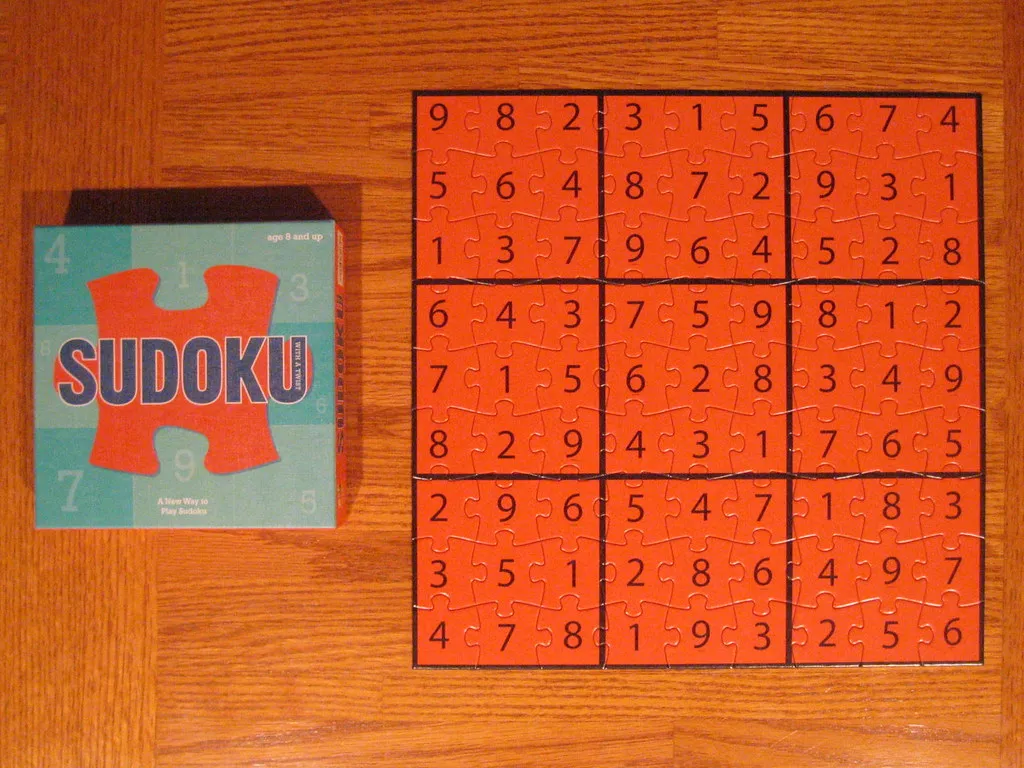
Sudoku and its kid-friendly versions use numbers or pictures. Children learn to eliminate possibilities. Start with 4x4 grids, and move to 6x6 and 9x9.
Mazes
Mazes build planning and spatial reasoning. Start with simple ones and move to harder ones.
Pattern and sequence puzzles
Children identify the next shape, color, or number in a sequence. These build early math skills.
Tangrams and shape puzzles
Tangrams use seven shapes to form pictures. They build spatial reasoning and geometry sense.
Brain teasers and riddles
These are more verbal. They make children think flexibly. They are good for car rides.
Jigsaw puzzles
A jigsaw is a form of visual logic. See jigsaw puzzle tips.
Skills children can build
Puzzles tend to build focus, persistence, planning, and flexible thinking. Children also learn to tolerate frustration, which is a very useful skill. Results vary by child, and puzzles are not a substitute for teaching, but they are a pleasant way to practice.
How to start
- Pick the right level. A puzzle that is too easy gets boring, and one that is too hard gets frustrating.
- Start with a few easy challenges to build confidence.
- Let the child try first. Resist the urge to jump in.
- Offer hints, not answers. Ask: “What happens if you move this piece?”
- Praise effort. “You kept trying different ways” is better than “You are smart.”
- Take breaks. Come back later.
What to do when a child gets stuck
- Ask them to explain what they have tried.
- Suggest starting over.
- Point to one part of the puzzle.
- Offer a simpler version.
- Let them take a break.
Getting stuck is part of learning. Do not rescue too quickly.
Make it social
Solve puzzles together, or take turns. Race to see who can finish faster, or make challenge cards for each other. Puzzles can be part of family game night.
Digital vs physical
Apps offer endless puzzles, but physical puzzles give hands-on practice and reduce screen time. A mix is fine. Check app privacy and ads.
Track progress
Keep a chart of completed challenges. Children enjoy seeing their progress. Try timing, or aim for fewer moves.
Safety
Puzzle pieces can be small. Check age labels, and keep small pieces away from young children. See toy safety: small parts, magnets, and batteries.
Frequently asked questions
At what age can children start? Simple sorting and pattern games work for preschoolers. More complex logic puzzles suit older children. Follow the age label on each puzzle.
What if my child gets frustrated? Take a break, try an easier challenge, and come back. Praise the effort, not just the result.
Should I time the puzzles? Not at first. Timing can add pressure. Once a child is confident, timing can make a fun challenge. Let the child decide.
The takeaway
Logic puzzles build patience and thinking. Let children struggle a little, offer hints, and celebrate effort. Our researched top-10 list lists puzzles and games with links to official pages. See also how to solve a Rubik’s Cube.